
Multisensory instruction is often described as an “approach,” but in practice, it’s much more powerful than that—it’s a collection of intentional strategies that activate multiple areas of the brain at the same time. When students see it, hear it, say it, and do it, learning becomes more meaningful, more accessible, and far more likely to stick.
This is especially important in today’s classrooms where teachers are supporting diverse learners, including students with learning differences, language barriers, attention challenges, and varying levels of prior knowledge.
Below are practical, classroom-ready multisensory strategies you can implement immediately.
Why Multisensory Instruction Works
When students engage more than one sense during learning, they create stronger neural connections. This improves:
- Memory retention
- Concept understanding
- Attention and focus
- Transfer of learning to new situations
In short: students don’t just “hear” the lesson—they experience it.
High-Impact Multisensory Instruction Strategies
1. Say It, Build It, Write It
Instead of teaching vocabulary or concepts in isolation, have students:
- Say it aloud (auditory)
- Build it with manipulatives or drawing (kinesthetic/visual)
- Write it in their own words (tactile/reflective)
Example:
For the word “ecosystem”, students say it, sketch a simple environment, and write a definition in their own language.
2. Air Writing and Movement-Based Encoding
Students physically “write” or trace concepts in the air while saying them aloud.
Example:
- Spelling words
- Vocabulary terms
- Math steps (like solving equations)
This strengthens muscle memory and supports students who struggle with traditional note-taking.
3. Color-Coded Thinking Systems
Assign meaning through color to support cognitive organization.
Examples:
- Highlight main ideas in one color and details in another
- Use color for parts of speech
- Color-code steps in a process (especially in math or science)
This reduces cognitive load and helps students “see” patterns in information.
4. Read–Draw–Explain Routine
Instead of passive reading, students:
- Read a short passage or problem
- Draw what they understand
- Explain it verbally or in writing
This works especially well for:
- Reading comprehension
- Word problems
- Science concepts

5. Gesture-Based Learning Anchors
Assign gestures to key concepts so students physically “anchor” meaning.
Examples:
- Expanding hands for “increase”
- Folding arms for “condense”
- Circular motion for “cycle”
Gestures are especially powerful for memory retrieval during assessments.
6. Manipulatives + Real Objects
Whenever possible, move from abstract to concrete.
Examples:
- Base-ten blocks for place value
- Fraction tiles for equivalence
- Real-world objects for measurement
The goal is to touch understanding before abstracting it.
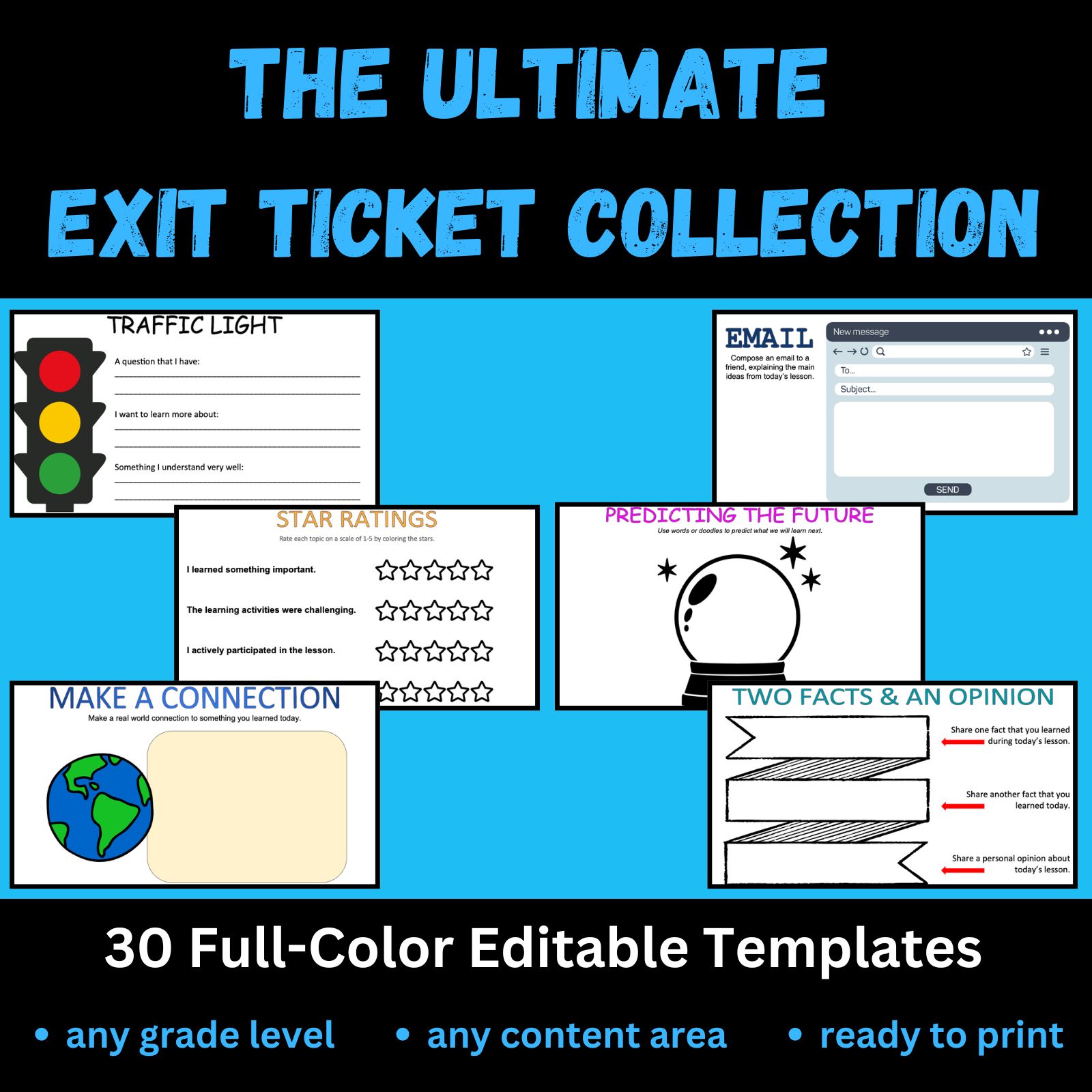
7. Multi-Modal Exit Tickets
End lessons with a choice-based response:
- Draw it
- Write it
- Say it (recorded or live)
- Build it
This ensures every student processes learning in a way that fits their strengths.
Looking for a wide variety of no-prep exit tickets? ⬇️
Bringing It All Together in Your Classroom
You do not need to use every strategy at once. The power of multisensory instruction comes from intentional layering.
A simple structure might look like:
- Introduce concept visually
- Reinforce it with movement or manipulatives
- Process it through partner talk
- Assess it through a multisensory exit ticket
How This Connects to Deeper Teaching Practice
If you find yourself thinking, “This is great, but I need systems that make this easier to implement every day,” that’s exactly where structured frameworks matter.
These strategies are part of a bigger instructional mindset—one that focuses on engagement, clarity, and student ownership of learning. In my work with teachers and schools, I go deeper into how to build these routines into everyday instruction without overwhelming planning time.
Many of these ideas are expanded with ready-to-use templates and classroom examples in my book and accompanying teacher resources, designed specifically to help educators bring this kind of instruction into real classrooms consistently.
Final Thought
Multisensory instruction is not about adding more to your plate—it’s about making what you already teach more accessible, memorable, and effective for every learner in the room.
When students experience learning through multiple pathways, they don’t just perform better—they understand better.