
Attention and engagement naturally decrease when students sit passively for long periods of time. Brain breaks are short, intentional activities that help students reset their attention, increase movement, improve focus, and re-engage in learning. Whether you teach elementary students, middle schoolers, high school students, or adult learners, brain breaks can dramatically improve classroom energy, participation, and on-task behavior.
The best brain breaks are quick, interactive, and fun. Some involve movement, while others encourage collaboration, creativity, or problem-solving. The key is giving learners an opportunity to mentally recharge before transitioning back into instruction.
What Are Brain Breaks?
Brain breaks are brief activities designed to give students a mental and physical reset during learning. These breaks typically last between 1–5 minutes and can include movement, discussion, mindfulness, games, or quick collaborative challenges.
Effective brain breaks can:
- Increase attention and focus
- Improve student engagement
- Reduce off-task behavior
- Support self-regulation
- Boost classroom participation
- Improve classroom climate and energy
Why Brain Breaks Matter
Students are not designed to sit passively and absorb information for long periods of time. Active participation and movement help improve attention, memory, and learning. Brain breaks also provide valuable opportunities for students to release energy, reduce stress, and reconnect with the learning environment.
When implemented consistently, brain breaks can help create a more active, engaging classroom culture where students are ready to participate and learn.
Brain Breaks by Visionary Teaching
The Server
During my live presentations, The Server is always an audience favorite. This is a great example of a brain break because it is physical, it requires concentration, and it promotes problem solving.
- Grab a book, notebook, or other flat object.
- Hold your object in the palm of your hand like a tray.
- Rotate your wrist outward.
- Drop your arm and rotate your wrist inward.
- Raise your item back to the beginning server position.
Ear & Nose/ Write the Alphabet
Ear & Nose
First, take your right pointer finger and touch the tip of your nose. Next, take your left thumb & pointer finger and pinch your right earlobe. Now, switch your hands back and forth as fast as you can.
Write the Alphabet
Ask your students to stand on one foot. On your cue, each student should use their pointer finger to draw the alphabet in the air as quickly as possible. If you want to change things up, you can specify lowercase letters or cursive letters.
Pen Flip
Students can enjoy the pen flip brain break while sitting or standing. Ask them to imitate a variety of pen flips including:
- half rotation
- full rotation
- flip from one hand to the other
- 2 pens at a time
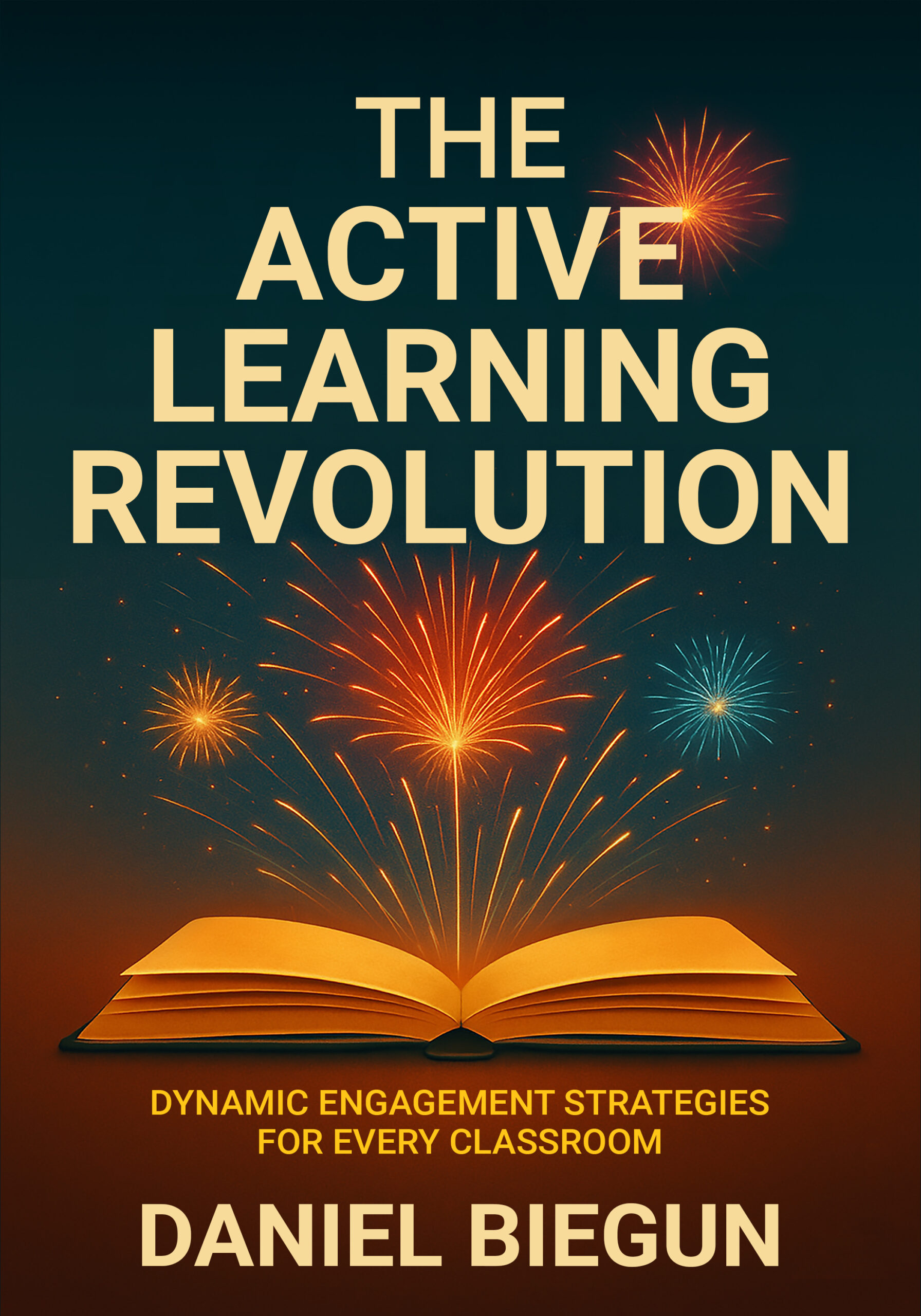
Want even more classroom engagement strategies?
The Active Learning Revolution features innovative brain breaks, collaborative learning activities, whole-group opportunities to respond, and more than 50 active learning strategies that help students stay focused & actively engaged in learning.
More Engaging Brain Break Options
Movement-Based Brain Breaks
Freeze Dance
Play music and allow students to dance or move around the room. When the music stops, students freeze in place.
Scavenger Hunt
Give students 30 seconds to find an item connected to a category, color, shape, or vocabulary word.
Mirror Movements
Students partner up and mirror one another’s movements for 30–60 seconds.
This or That
Students move to different sides of the room based on a preference or opinion question.
Gesture Challenges
Students create gestures or motions connected to vocabulary terms, concepts, or content-area ideas.
Quiet Brain Breaks
Guided Visualization
Lead students through a quick mental imagery activity that encourages relaxation and focus.
Deep Breathing
Use short breathing exercises to help students reset and regulate their attention.
Would You Rather?
Pose fun, high-interest questions that encourage quick thinking and discussion.
Doodle Challenge
Give students one minute to quickly sketch a silly prompt or idea.
Visual Puzzles
Display quick riddles, brain teasers, or “find the difference” images.
Brain Breaks for Any Learning Environment
Brain breaks work in traditional classrooms, virtual learning environments, staff meetings, professional development sessions, and small-group instruction. Most activities can easily be adapted for students of all ages and ability levels.
The goal is simple: create opportunities for learners to actively participate, recharge their attention, and return to instruction ready to engage.
Final Thoughts
Brain breaks are far more than “time fillers.” When used intentionally, they are powerful instructional tools that improve engagement, increase participation, and support active learning. Short moments of movement, collaboration, and interaction can dramatically change the energy and focus of a classroom.
If we want students to actively engage in learning, we must create learning environments that allow them to move, think, collaborate, and participate throughout the instructional day.