
The first few days of school set the tone for everything that follows.
Students are deciding:
- Do I feel safe here?
- Do I belong here?
- Is this class going to be engaging—or just another routine?
And teachers are trying to accomplish something just as important:
👉 Build relationships
👉 Establish expectations
👉 Foster a culture of learning
That’s a lot to do in a short amount of time.
This is where Icebreaker Bingo becomes one of the most effective classroom community-building strategies you can use.
Icebreaker Bingo transforms typical introductions into an interactive experience where students move, talk, and connect—without the awkwardness of forced sharing.
It’s simple, flexible, and incredibly powerful when used intentionally.
In fact, I regularly use variations of this strategy in professional development sessions with schools and districts to demonstrate how quickly engagement can be built in any learning environment.
Why Icebreaker Bingo Works So Well
Icebreaker Bingo is effective because it:
- Gets students moving and interacting immediately
- Reduces anxiety during the first week of school
- Builds natural peer connections
- Encourages communication without pressure
- Creates an inclusive classroom environment
Research and classroom experience both show that students are more engaged academically when they feel socially connected in the classroom.
And that connection starts on day one.
How Icebreaker Bingo Works (Simple Structure)
Students receive a bingo-style card with prompts such as:
- Find someone who…
- Has the same interest as you
- Has a unique experience
- Shares a learning goal
They walk around the room, ask questions, and fill in their boards by connecting with classmates.
The result?
👉 Instant conversation
👉 Natural movement
👉 Real community building
How to Play
🖨️ Step 1: Get Set Up
Print one Icebreaker Bingo sheet for each student. Make sure everyone has a pen or pencil.
🧩 Step 2: Understand the Board
Each Bingo card contains a grid of boxes, and each box includes a statement (e.g., “has a pet,” “likes math,” “is left-handed”).
🚶♂️ Step 3: Mingle and Connect
Students move around the room, talking with classmates to find someone who matches each statement on their board.
✍️ Step 4: Fill in the Boxes
When a student finds someone who fits a statement, that person writes their name or initials in the corresponding box.
👉 For example:
If a box says “is left-handed,” students must find a left-handed classmate and have them sign that square.
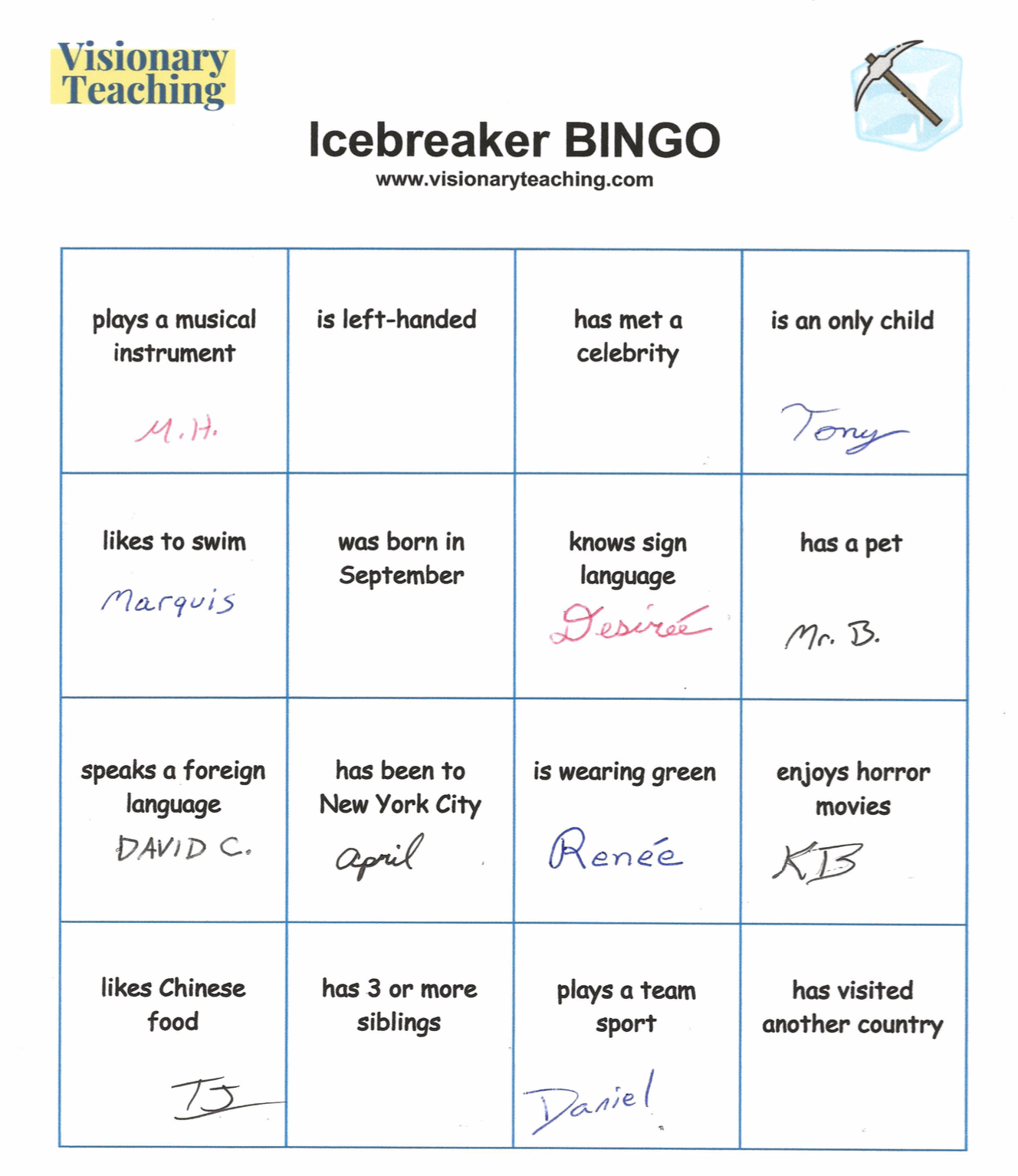
This player was able to get eleven classmates to sign their name in a box.
🎯 Tips for Running Icebreaker Bingo Successfully
⏱️ Set the Right Time Frame
Plan for about 15–20 minutes. This gives students enough time to mingle and connect without the activity dragging on.
👥 Encourage More Interaction
If your group is large, add this rule:
👉 Each student can only sign one box per sheet
This pushes students to meet more people, not just stick with friends.
🎶 Create the Right Atmosphere
Play upbeat music in the background.
It instantly makes the activity feel:
- More relaxed
- More fun
- Less awkward
🟦 Try “Coverall” Mode
Instead of traditional Bingo, challenge students to:
👉 Fill in as many squares as possible
This keeps everyone engaged the entire time.
🏆 Rethink Rewards
Avoid giving a prize to the fastest student—that often leads to rushed, surface-level interactions.
Instead, try:
- 🎉 Rewarding everyone who completes their board
- 🎟️ Collecting completed boards and doing a random drawing
💡 And remind students… the real prize is making new connections.
🧠 Why This Strategy Is More Than “Just an Icebreaker”
Icebreaker Bingo is not just a first-day activity.
It’s the beginning of a larger instructional mindset:
- Engagement first
- Relationships first
- Learning through interaction
In my book, I go deeper into how active learning strategies like this create classrooms where students are engaged from the moment they walk in—not just when content begins.
🎓 Want a Ready-to-Use Icebreaker Bingo Game?
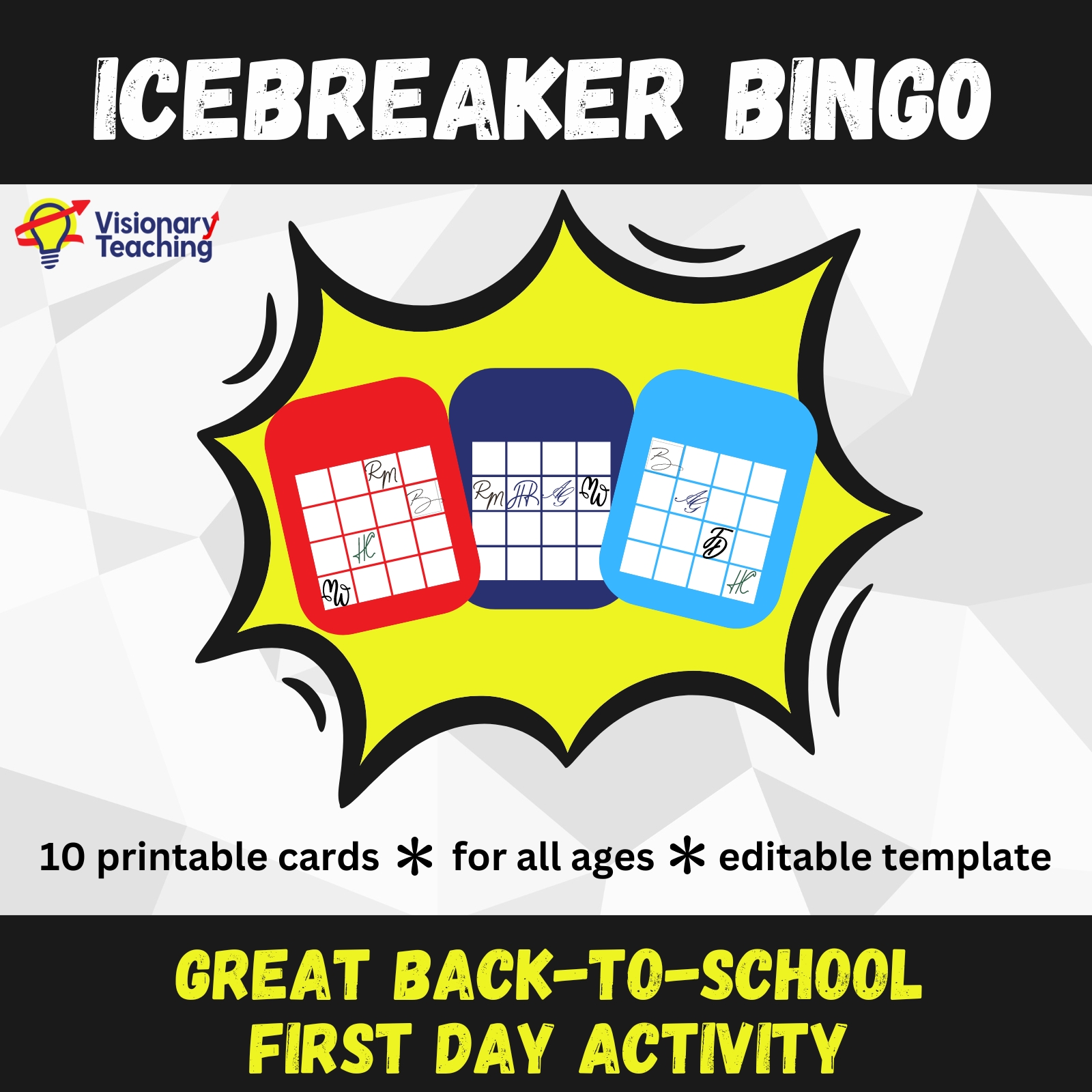
If you want a plug-and-play version of this strategy, I’ve created a resource designed specifically for busy teachers who want immediate impact.
👉 Classroom-ready engagement materials available in my TPT store
📘 Build Engagement Beyond Day One
Icebreaker activities are powerful—but they are just the beginning.
True engagement comes from consistent active learning strategies throughout the year:
- Structured student interaction
- Thoughtful questioning
- Formative assessment
- Choice and voice
That’s the framework I outline in my book, where I break down how to move from “activities that work once” to systems that sustain engagement all year long.
🎤 Bring This Strategy to Your School
Icebreaker Bingo is one of the most requested demonstration activities in my professional development sessions because it immediately shows educators:
👉 Engagement is not complicated
👉 Classroom culture can be built quickly
👉 Students respond to movement and interaction
If your school or district is focused on:
- Student engagement
- Classroom management
- Back-to-school readiness
- Active learning strategies
I offer hands-on keynote sessions and professional development workshops that model strategies like this in real time.
Final Thoughts
The first week of school is not just about procedures—it’s about connection.
Icebreaker Bingo is one of the simplest, most effective ways to start building that connection immediately.
And when students feel connected, everything else becomes easier:
- Instruction
- Management
- Engagement
- Learning
Start with relationships—and everything else follows.