Teachers often feel pressure to “cover it all.” But here’s the truth:
Learning doesn’t happen during nonstop instruction—it happens during the pause.
The Pause Procedure is a simple, research-backed strategy that dramatically improves student thinking, engagement, and retention by intentionally building processing time into your lessons.
What Is the Pause Procedure?
The Pause Procedure involves stopping instruction every 10–20 minutes to give students time to process, reflect, and interact with new information.
Research shows that even short pauses (2–3 minutes) can significantly improve both short-term and long-term memory.
In fact, increasing “wait time” after questions leads to:
- Higher-quality responses
- More student participation
- Deeper critical thinking
Why Pausing Works (The Brain Science)
Students cannot absorb information at the pace we deliver it.
Without processing time:
- Cognitive overload increases
- Retention decreases
- Only fast processors participate
With intentional pauses:
- Students organize and connect ideas
- Thinking becomes more analytical and reflective
- Engagement shifts from passive to active

How Long Should You Pause?
Use these evidence-based guidelines:
- 3–5 seconds after asking a question (minimum for quality thinking)
- 30 seconds–3 minutes for deeper reflection tasks
- Every 10–20 minutes during direct instruction
👉 Most teachers wait less than 2 seconds—far too short for meaningful thinking.
5 Powerful Ways to Use the Pause Procedure
1. Think Time After Questions
Ask a question → pause → then respond.
Try this:
“Don’t raise your hand yet—take 30 seconds to think.”
This increases both confidence and response quality.
2. Note Reflection Pauses
Have students:
- Annotate notes
- Highlight key ideas
- Write one takeaway
This strengthens memory and organization.
3. Turn-and-Talk Processing
Students briefly discuss:
- Key concepts
- Confusions
- Connections
This builds clarity and participation.
4. Quick Writes
Pause and ask:
- “What’s the most important idea so far?”
- “What questions do you still have?”
This reveals real-time understanding.
and organization.
5. Whole-Group Response Pause
Use a cue like:
“3…2…1…respond.”
This ensures everyone processes before answering—not just the fastest students.
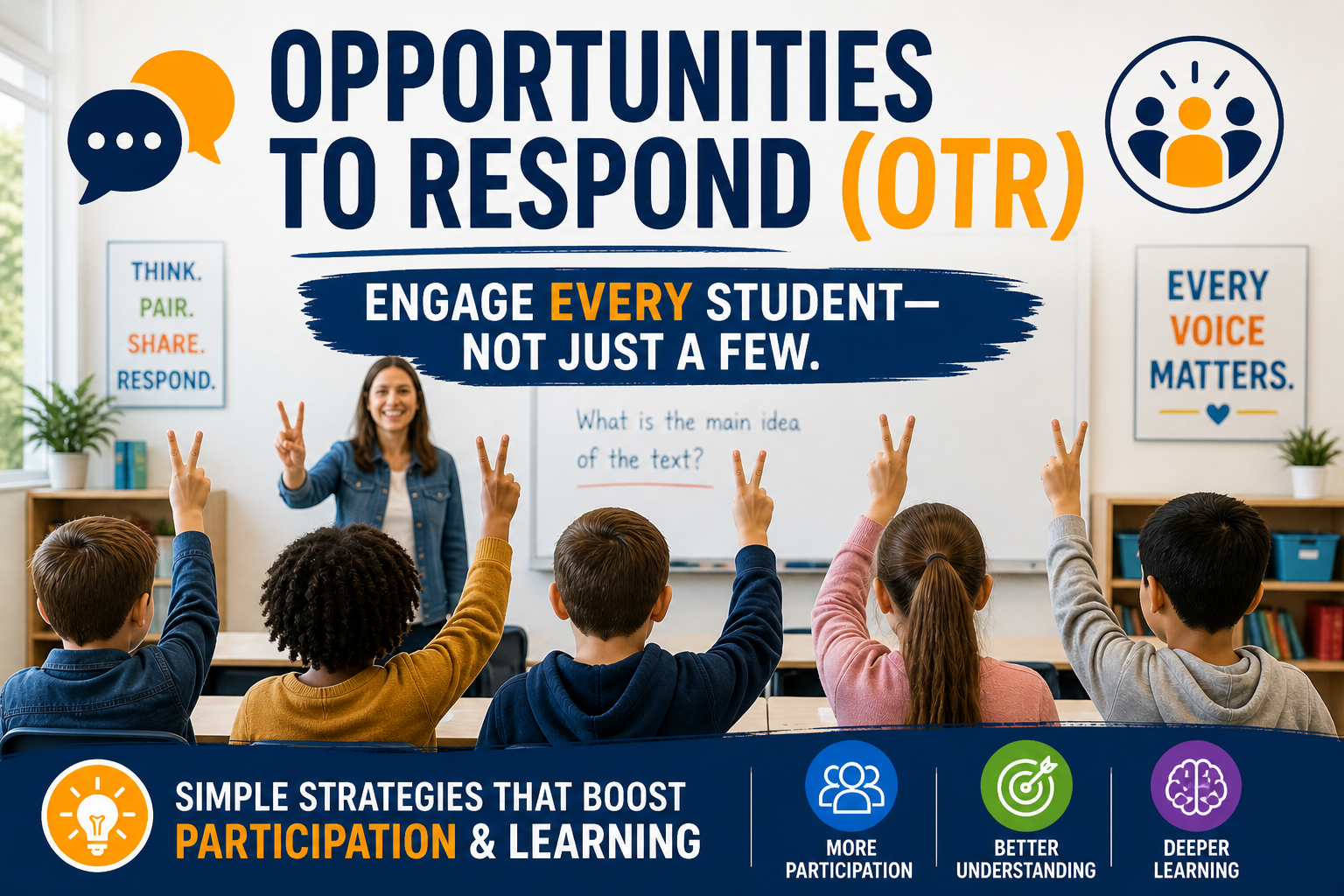
Learn more about whole-group opportunities to respond here. 👉
Why This Strategy Matters More Than Ever
In today’s fast-paced classrooms, students are constantly overwhelmed with information.
The Pause Procedure:
- Reduces cognitive overload
- Increases equity (more students can participate)
- Improves long-term retention
- Creates deeper learning experiences
It’s not “lost time.”
It’s where learning actually happens.
Want More High-Impact Strategies Like This?
The Pause Procedure is just one of many research-backed instructional moves that can transform your classroom.
👉 In my book, I share practical, ready-to-use strategies that increase:
- Engagement
- Thinking
- Student ownership
🎤 I also work with schools and districts to bring these strategies to life through high-energy professional development and keynotes.