
Walk into many classrooms and you will still see the same instructional pattern that has existed for decades: the teacher speaks while students listen. While direct instruction has an important place in teaching, students learn best when they are actively engaged in the learning process.
One of the most powerful ways to increase engagement is through cooperative learning strategies. When students work together to exchange ideas, reflect on content, and build knowledge collaboratively, learning becomes more dynamic and meaningful.
Research consistently shows that cooperative learning can lead to stronger academic outcomes, improved communication skills, and deeper understanding of content. Instead of passively receiving information, students become participants in the learning process.
Benefits of Cooperative Learning
Effective cooperative learning strategies provide several key benefits for students.
1. Increased Engagement
Students are more motivated when they are interacting with peers rather than simply completing tasks independently. Short, structured activities keep energy levels high and reduce passive learning.
2. Deeper Understanding of Content
When students explain ideas to one another, they clarify their own thinking. This process strengthens comprehension and helps students retain information longer.
3. Development of Communication Skills
Cooperative learning requires students to speak, listen, and respond to others. These skills are essential not only in school but in future careers.
4. Exposure to Multiple Perspectives
Students benefit from hearing how classmates approach a question or problem. A peer may think of an idea that others had not considered.
5. A More Active Classroom Environment
Structured interaction shifts the classroom from teacher-centered to student-centered learning. Instead of a room full of passive listeners, students are moving, discussing, and collaborating.
One simple strategy that accomplishes all of these goals is Give One, Get One.
Cooperative Learning Strategy Spotlight: Give One, Get One
Give One, Get One is a fast-paced cooperative learning strategy where students reflect on a topic and then exchange ideas with classmates.
Teachers can use prompts that ask students to share background knowledge, make personal connections to content, or review previous lessons. As students move around the room trading ideas, they hear multiple perspectives and expand their understanding of the topic.
Because it is quick and flexible, this activity works in nearly any classroom setting.
Environment
This activity can be completed in any classroom.
Time
Give One, Get One takes about 10 minutes to complete.
Materials
-
Pre-printed graphic organizers or blank sheets of paper
-
Writing utensils
How to Implement Give One, Get One
Step 1: Create the Graphic Organizer
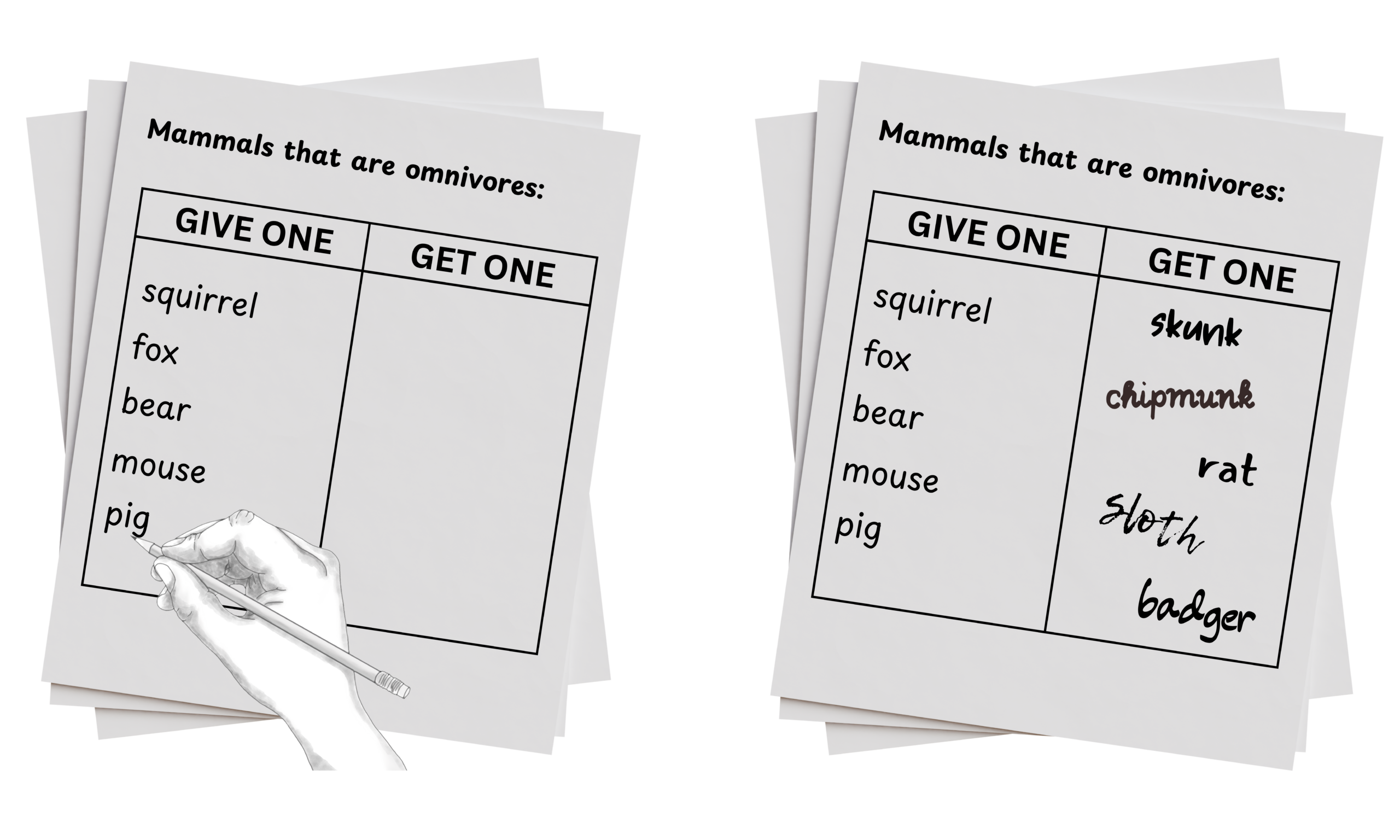
Students begin with a two-column organizer.
-
Left column: Give One
-
Right column: Get One
Teachers can provide a template or ask students to create their own columns on a blank sheet of paper.
Step 2: Provide a Prompt
Give students an open-ended prompt connected to the current unit of study. Prompts should allow for multiple possible responses.
Example:
Make a list of mammals that are omnivores.
Step 3: Independent Brainstorming
Give students 3–5 minutes to write ideas in the Give One column.
This step ensures every student enters the activity with ideas to share.
Step 4: Exchange Ideas with Peers
Students stand and move around the classroom to find a partner.
During each interaction:
-
Students share ideas from their Give One column.
-
Each student writes one new idea from their partner in the Get One column.
-
Students then find a new partner and repeat the process.
This continues until students have collected multiple ideas from classmates.
Sample Give One, Get One Prompts
Teachers can use this strategy across grade levels and subject areas.
Make a list of:
-
nonfiction text types
-
synonyms for the word big
-
prime numbers
-
coin combinations that add up to 48 cents
-
words associated with our solar system
-
U.S. state capitals
-
healthy foods
-
famous artists
-
Olympic sports
-
genres of music
Want More Information on Cooperative Learning?
If you’re interested in uncovering many more innovative & engaging cooperative learning strategies, you can explore them in my book:
📘 The Active Learning Revolution by Daniel Biegun
The book shares practical strategies for increasing student engagement, opportunities to respond, and active learning in any classroom.