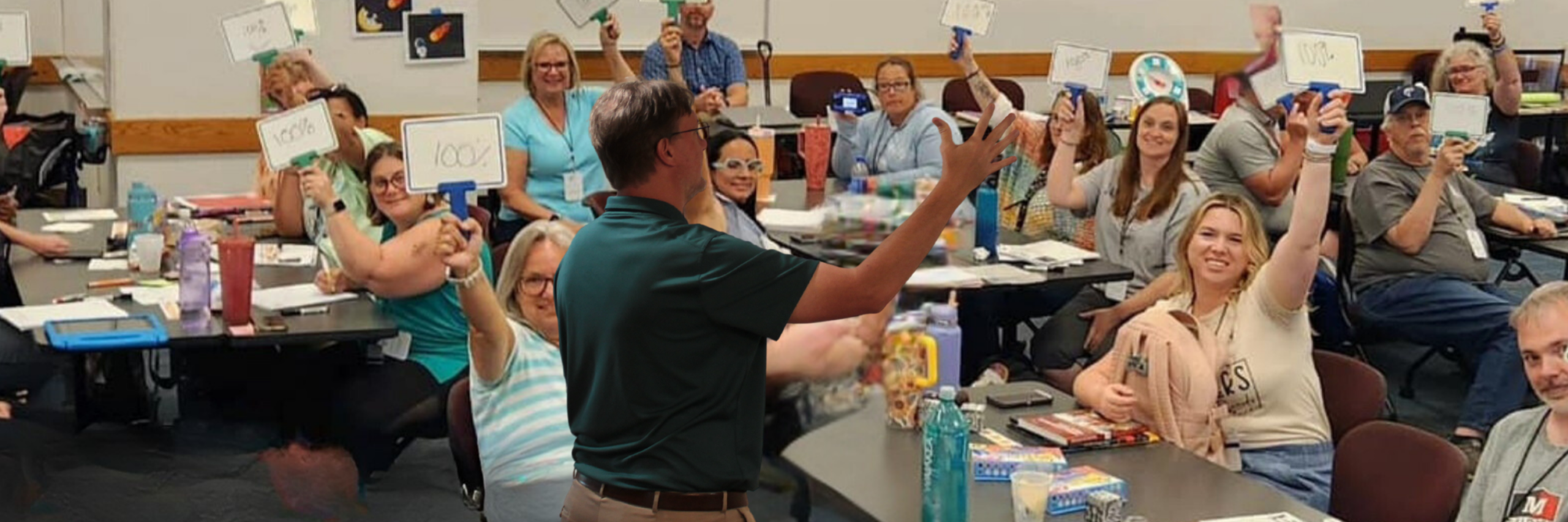
Schools everywhere are working to improve student engagement, instructional practices, and academic outcomes. Yet many professional development sessions still rely on passive “sit-and-get” models that ask educators to sit quietly through lengthy presentations.
The problem? Teachers learn best the same way students do—through active participation, collaboration, reflection, and meaningful engagement.
Active learning professional development creates experiences where educators don’t just hear about effective teaching strategies—they actually experience them firsthand.
This immediately targets:
- active learning professional development
- teacher engagement
- effective teaching strategies
- professional learning
Teachers Don’t Need More Sit-and-Get PD
Educators don’t struggle because they lack information.
They struggle because they lack time, modeling, and practical experiences that show them how engagement actually works.
When teachers participate in active learning professional development, they aren’t just hearing about engagement—they’re experiencing it.
During my PD sessions, teachers are:
- Moving and interacting with content
- Collaborating with colleagues
- Problem-solving authentic instructional challenges
- Reflecting in real time on learning and practice
This isn’t accidental. It’s instructional design.
Why Modeling Active Learning in PD Matters
If we want:
- Active classrooms
- Engaged students
- Stronger academic outcomes
Then we must model active learning with adults first.

Professional learning should feel like a classroom—not a lecture hall.
When PD mirrors the strategies we want teachers to use, educators leave with:
- A deeper understanding of student engagement strategies
- Increased confidence to implement immediately
- Tools they’ve already practiced, not just heard about
This approach leads to better knowledge retention, stronger instructional transfer, & more sustainable change in classrooms.
What Does Active Learning Professional Development Look Like?
Effective professional learning should model the instructional strategies we want teachers to use with students.
In active learning PD sessions, educators might:
- Participate in collaborative problem-solving activities
- Engage in structured discussion protocols
- Analyze classroom scenarios and instructional decisions
- Reflect on learning through visible thinking routines
- Experience movement-based engagement strategies
- Practice instructional techniques in real time
Instead of passively receiving information, teachers become active participants in the learning process.
By designing PD experiences rooted in active learning, we create spaces where teachers can test strategies, reflect on outcomes, and envision how these practices fit their own students and contexts.
This is the foundation of The Active Learning Revolution—learning experiences that move beyond compliance and toward meaningful engagement.
The Bottom Line
If we want teachers to create engaging classrooms, we must give them engaging professional learning experiences.
Active learning isn’t just for students—it’s for educators too.
Looking for support in making your professional development more engaging & effective?