
Most classroom questions do one thing:
check for answers.
But the best questions?
They create thinkers.
If your goal is deeper learning, stronger engagement, and real understanding, your questioning strategy matters more than any curriculum or technology you use.
In this guide, you’ll learn 10 high-impact questioning strategies you can use immediately—plus examples for any subject area.
Why Questioning Matters More Than You Think
Many classrooms rely heavily on low-level recall questions:
- “What is the answer?”
- “Who was the first president?”
- “What’s the definition?”
These questions check memory—but they don’t build thinking.
Research and practice both show that purposeful questioning increases engagement and deepens understanding by requiring students to analyze, explain, and connect ideas.
Teaching Questions vs. Testing Questions
There are two types of questions every teacher should understand:
1. Testing Questions (Low Cognitive Demand)
- One correct answer
- Focus on recall
- Example: “Who was the first President of the United States?”
2. Teaching Questions (High Cognitive Demand)
- Multiple possible answers
- Require reasoning and explanation
- Example: “What would you do differently if you were President—and why?”
👉 If you want deeper learning, aim for at least 80% teaching questions.
🚀 10 Powerful Questioning Strategies
1. Ask Open-Ended Questions
Encourage students to explain, justify, and connect ideas.
Example:
“How could this problem be solved in more than one way?”
2. Use “Why” and “How” Prompts
Push beyond surface-level thinking.
Examples:
“Why do you think that strategy worked?”
“How might you approach this problem differently?”

3. Follow Up With “Tell Me More”
One of the simplest—and most powerful—moves.
Example:
“Tell me more about your thinking.”
4. Require Evidence-Based Answers
Students must support their thinking.
Example:
“What evidence from the text supports your answer?”
5. Ask Students to Compare & Contrast
Build analytical thinking.
Example:
“How are these two solutions similar and different?”
6. Use Hypothetical Questions
Encourage creativity and transfer.
Example:
“What might happen if we changed one variable?”
7. Turn Answers Into New Questions
Keep the thinking going.
Example:
“That’s interesting—what questions does that raise?”
8. Use Think-Pair-Share Before Answering
Increase participation and confidence.
The Think-Pair-Share Strategy affords each student plenty of think time to process the question, followed by valuable opportunities to talk ideas through with peers.
Check out this blog post that shares a way to level up your Think-Pair-Share activities. ➜

9. Ask Students to Challenge Ideas
Promote deeper discussion.
Example:
“Do you agree or disagree—and why?”
10. Plan Questions in Advance
Great questioning is intentional—not random.
📚 Examples Across Content Areas
Math:
“How many different ways can you solve this problem?”
ELA:
“How would the story change if it were told from another perspective?”
Science:
“What variables could affect this outcome?”
Social Studies:
“How might history be different if this event never happened?”
💡 The Big Shift
The goal isn’t to ask more questions.
It’s to ask better questions.
Because when students are thinking, discussing, and explaining…
learning becomes active—not passive.
📈 Want to Go Deeper?
If you want a complete system for:
- increasing student engagement
- improving questioning techniques
- getting every student involved
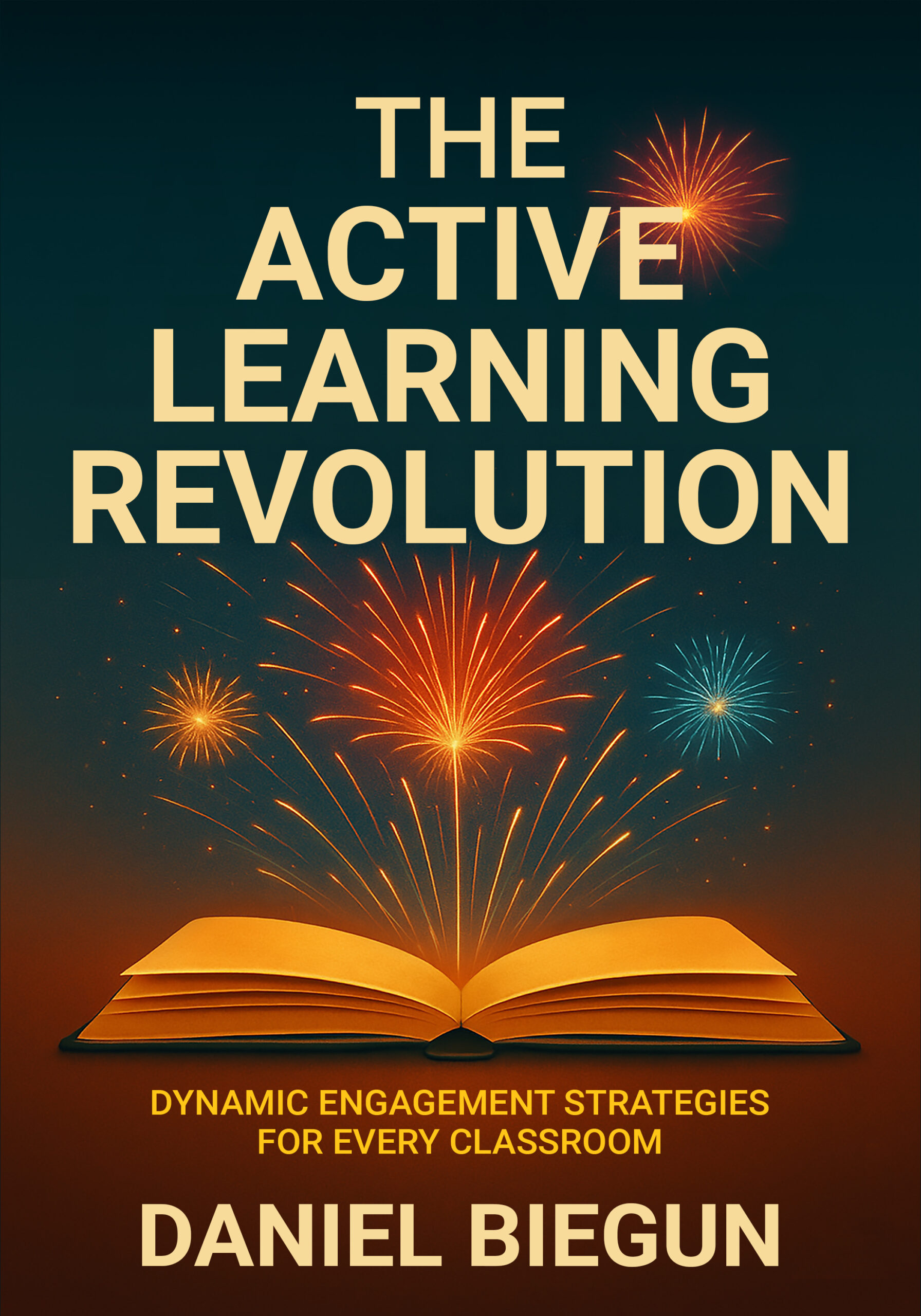
👉 Check out my book: The Active Learning Revolution
It includes ready-to-use strategies, prompts, and classroom-tested frameworks.