
As educators, we are constantly searching for ways to reach every student in our classrooms. We know that learners arrive with different strengths, challenges, interests, attention spans, backgrounds, and experiences. Yet traditional instruction often assumes that all students learn best in the same way.
That is where Universal Design for Learning (UDL) comes in.
Universal Design for Learning is not about lowering expectations or creating dozens of separate lessons. Instead, it is about designing flexible learning experiences that remove barriers and increase access for all learners from the very beginning.
Today’s classrooms are more diverse than ever. Students arrive with different learning preferences, language abilities, support needs, and levels of readiness. UDL helps teachers proactively plan instruction that supports learner variability instead of reacting after students struggle. When barriers are removed, students are more engaged, more confident, and more successful.
What is Universal Design for Learning?
Universal Design for Learning (UDL) is an educational framework that helps teachers design lessons that are accessible, engaging, and effective for a wide range of learners. Instead of relying on one-size-fits-all instruction, UDL encourages flexibility in how students access information, participate in learning, and demonstrate understanding.
The concept of Universal Design originally came from architecture.
Architects discovered that when buildings were designed with accessibility in mind from the start, everyone benefited. Features like curb cuts, automatic doors, elevators, and ramps were originally intended to support people with disabilities, but they ultimately made life easier for parents with strollers, travelers with luggage, delivery workers, and many others.
The same principle applies in education.
Rather than retrofitting accommodations after students struggle, Universal Design for Learning encourages educators to create learning environments that are flexible and accessible from the beginning.
Equality vs. Equity vs. Universal Design
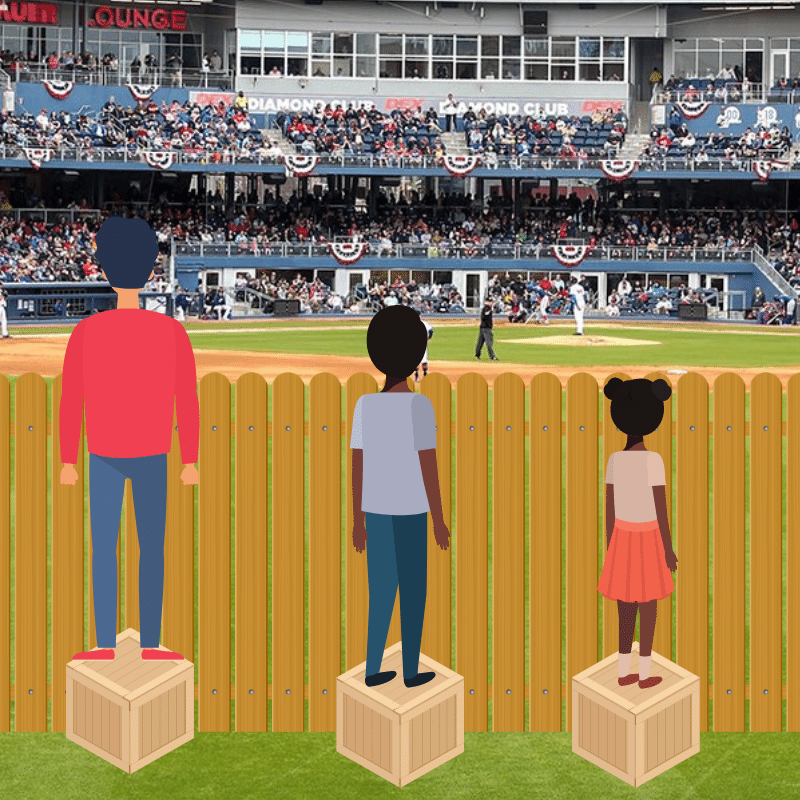
Equality
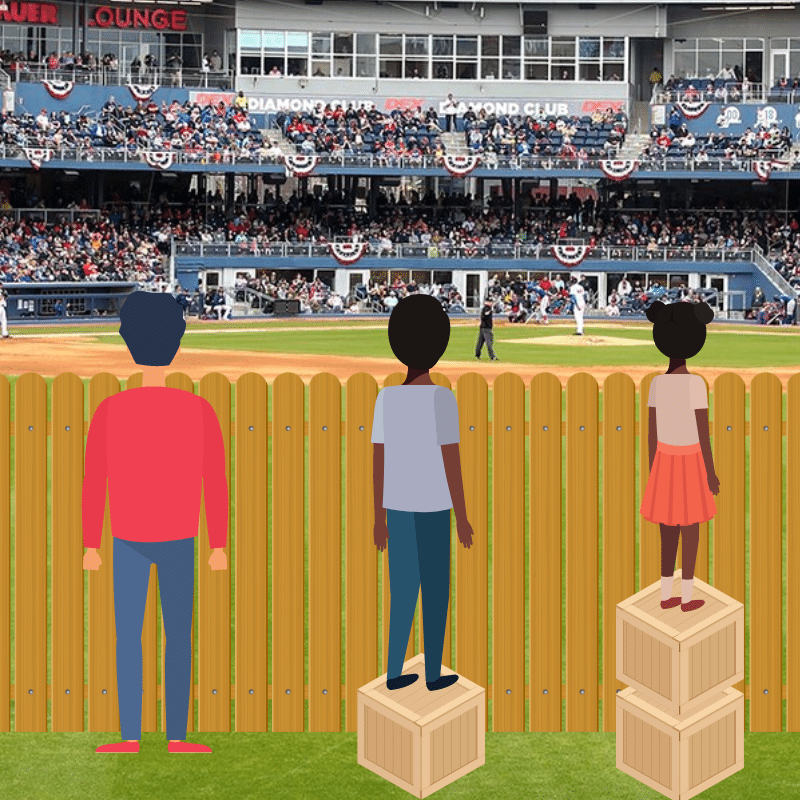
Equity
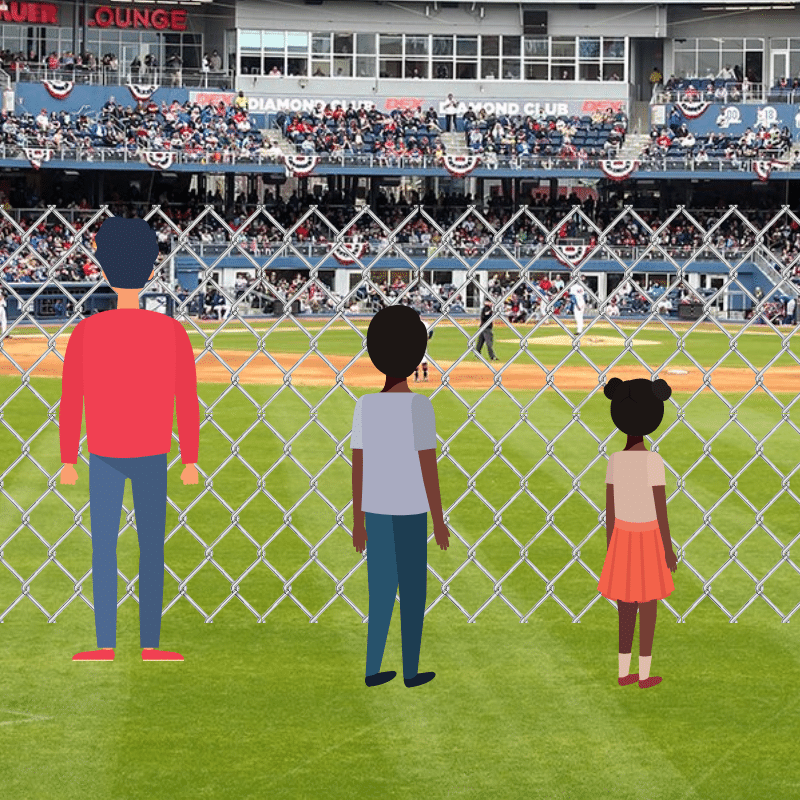
Equality
In this example, three children are trying to watch a baseball game, but the wooden fence creates a barrier because they cannot see through it.
Equality
The first panel above represents equality, meaning that everyone gets the exact same thing. In schools, all students would receive identical instruction and materials. Unfortunately, this doesn’t work in education. Each child received 1 crate. One of the children did not need the crate, and another was still unable to see the game.
Equity
The middle panel represents equity, meaning that everyone gets what they need in order to have a fair chance at success. A common example of equity in public schools is special education. Some students receive additional or specialized instruction along with helpful accommodations in order to access the curriculum. In the cartoon, all 3 people can now see the baseball game. Equity is great, but there is an even better option.
Universal Design for Learning
The panel on the right represents Universal Design for Learning, which focusses on eliminating potential barriers ahead of time. In the first two panels, the wooden fence represents a barrier to the people being able to see the baseball game. In the third panel, we remove that barrier so that we no longer need the crates. This UDL series will focus on eliminating potential barriers so that all students have fair access to instruction.
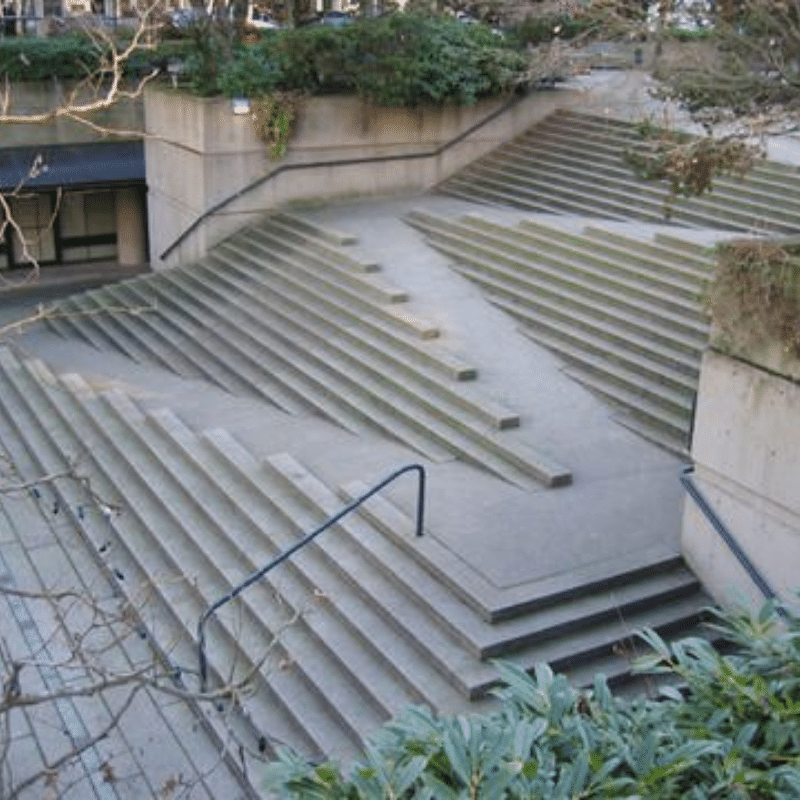
I mentioned earlier that UDL has its roots in architecture. Let’s look at 2 examples:

This picture depicts a wheelchair ramp attached to a house. This example represents an accommodation. It was likely built specifically for one person to access this particular home. There is also a good chance that the ramp was built after the person with a physical disability moved into the house.
Why UDL Matters in Modern Classrooms
Teachers today face enormous demands. We are expected to meet diverse learning needs while maintaining high academic expectations and increasing student engagement.
Universal Design for Learning provides a practical framework for accomplishing both goals.
Rather than creating entirely separate lessons for different groups of students, UDL encourages teachers to build flexibility into instruction from the start.
This approach benefits:
- Students with disabilities
- English language learners
- Gifted learners
- Students with attention or motivation challenges
- Students with executive functioning difficulties
- Learners who simply process information differently
Interestingly, strategies designed to support struggling learners often improve instruction for everyone.
Visual supports help all students process information.
Movement increases attention and focus.
Discussion improves comprehension.
Choice increases motivation and ownership.
Multisensory instruction improves retention.
Flexible instruction simply creates better learning experiences.
The Three Principles of Universal Design for Learning
1. Multiple Means of Engagement
The “why” of learning.
Students are more engaged when learning feels meaningful, interactive, and relevant. Providing opportunities for collaboration, movement, discussion, goal-setting, and student choice can dramatically increase participation and motivation.
This is one reason I frequently incorporate strategies like Think-Pair-Share, brain breaks, classroom discussion routines, and student-centered learning structures into instruction.
2. Multiple Means of Representation
The “what” of learning.
Students need multiple ways to access information. Some learners process information best through visuals, while others benefit from audio, modeling, discussion, or hands-on experiences.
Teachers can increase accessibility by:
- Using visuals and graphic organizers
- Incorporating videos and multimedia
- Modeling directions
- Activating background knowledge
- Breaking complex concepts into smaller parts
- Providing examples and non-examples
This principle connects closely to multisensory instruction and differentiated teaching practices.
3. Multiple Means of Action and Expression
The “how” of learning.
Students should have flexible opportunities to demonstrate understanding.
Not every learner can best communicate mastery through a traditional worksheet or written response. UDL encourages teachers to provide options whenever possible.
Students might demonstrate learning through:
- Presentations
- Projects
- Discussions
- Visual representations
- Writing
- Digital products
- Collaborative tasks
- Creative responses
When students have meaningful opportunities to express understanding, engagement and achievement often increase.
UDL and Student Engagement
One reason I am so passionate about Universal Design for Learning is because it directly connects to student engagement.
When students feel successful, included, and supported, they participate more fully in learning.
When instruction is rigid and inaccessible, disengagement increases.
UDL helps create classrooms where:
- Students feel capable
- Learning feels relevant
- Participation increases
- Confidence grows
- Collaboration improves
- Barriers decrease
This is also why UDL aligns so naturally with many of the student engagement strategies I share throughout this site.
Strategies like:
all support more accessible and engaging instruction.
If you are ready to move beyond theory and begin implementing practical strategies immediately, be sure to read my companion article:
In that post, I explore practical classroom applications connected to the three UDL brain networks and share realistic strategies teachers can implement right away.
Final Thoughts
Universal Design for Learning is not another educational trend.
It is a mindset shift.
It challenges us to stop asking students to adapt to rigid systems and instead encourages us to design learning experiences that are flexible, engaging, and accessible from the beginning.
The goal is not perfection.
The goal is progress.
When we intentionally remove barriers and increase access, we create classrooms where more students can thrive.
And ultimately, that benefits everyone.
Many of the engagement strategies and practical classroom structures discussed throughout this UDL series are featured in my book, which focuses on helping teachers create highly engaging, accessible learning experiences for all students. My goal has always been to bridge the gap between educational theory and realistic classroom practice.